The Distraction That Became the Main Event
What a 95% drop in Epstein coverage reveals about controlling the narrative, how the same playbook runs inside companies, and why the tools to verify it yourself already exist.
TL;DR: When Iran strikes began on February 28, Epstein-related searches dropped 95% in 48 hours. The network data is damning: Fox mentioned "Epstein" 14x less than MSNBC during peak coverage, and once the bombs fell, every network pivoted to war. The data is all public. The tools to verify it yourself exist today. The question is whether you're still outsourcing your information diet to editorial desks that have proven, by the numbers, that they will follow the loudest story every time.
I started pulling this data because I wanted to confront a feeling with numbers. The Epstein files felt like they had vanished from the news overnight, and I wanted to know if that was real or just my own attention shifting. It took about five minutes. Every dataset cited here is publicly available, every claim traceable to a named source. In 2026, the inability to check the record yourself is no longer an excuse; the unwillingness to do so is the actual problem.
"Who controls the past controls the future. Who controls the present controls the past."
George Orwell, Nineteen Eighty-Four
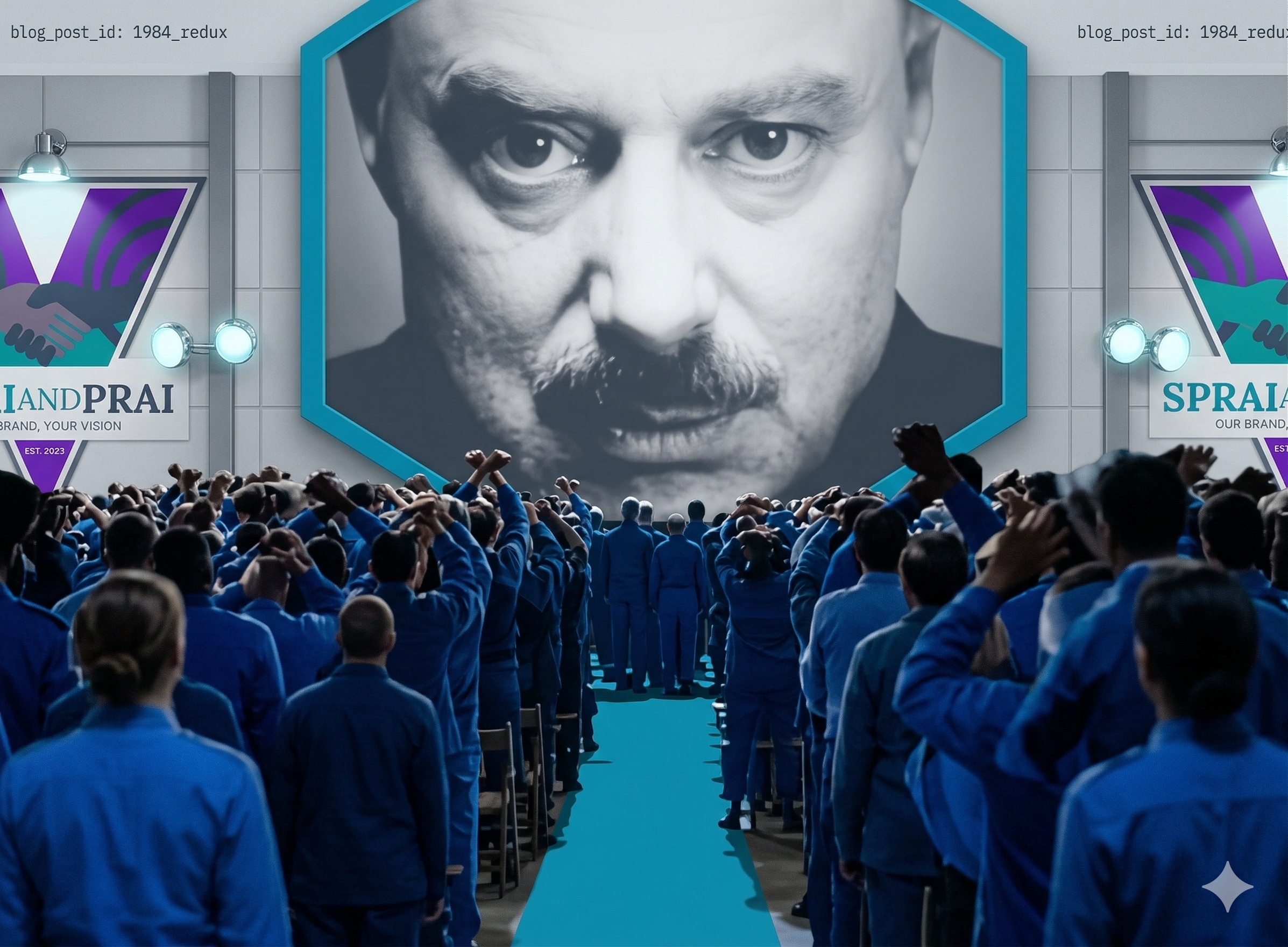
Orwell never saw cable news, and he didn't need to. The mechanism he described in 1984 wasn't really about rewriting newspaper archives or burning old photographs. It was about something more ordinary and more effective: controlling what people pay attention to right now. The past doesn't need to be erased if nobody is looking at it.
In the novel, the Ministry of Truth doesn't just lie. It manages the flow of information so that yesterday's truth and today's truth never have to coexist in public consciousness. The population isn't brainwashed; they're busy, they're overwhelmed, and they have a war to watch.
That is the pattern the data reveals about the Epstein files and the Iran war. Not a conspiracy of censorship, but something more familiar: the structural reality of how a 24-hour news cycle handles competing stories, and what happens when the biggest possible story collides with the loudest possible one.
The numbers, network by network
Media Matters for America ran the count. They searched transcripts in the Kinetiq video database for every mention of "Epstein" in original programming on CNN, Fox News, MSNBC, and Newsmax from January 30 (the day the DOJ released 3.5 million pages) through February 17, 2026. Nineteen days of coverage.
MSNBC mentioned Epstein 3,321 times; CNN logged 2,304; Newsmax came in at 1,464.
Fox News: 239.
That's not a gap; that's a different editorial universe. MSNBC mentioned Epstein roughly fourteen times for every single Fox mention. Even Newsmax, a network that exists largely to Fox's right, covered it six times more. When Fox did run segments on the files, the focus landed on Bill Clinton and Bill Gates. The name at the center of the political firestorm, the sitting president, barely came up.
Poynter put a finer point on it. On the day House Democrats released Epstein emails in which the financier wrote that Trump "knew about the girls," Media Matters tracked CNN and MSNBC each covering the story for nearly an hour by noon. Fox News had devoted six seconds to it, not six minutes, six seconds. One correspondent made a passing reference to "new developments from the House Oversight Committee" without saying what those developments were. The rest of Fox's programming that morning ran segments on Democratic infighting, a 50-year mortgage plan, and Trump's "affordability" agenda.
Then came the bombs
On February 28, 2026, the United States and Israel launched strikes on Iran. By every measure available, the Epstein story fell off a cliff.
Google Trends data, reported by IBTimes, Al Jazeera, and others, showed Epstein-related search interest dropping roughly 95 percent within days. Iran war searches spiked more than 1,200 percent. The crossover was almost instantaneous; within 48 hours, the information environment had been completely reorganized.
But here is where it gets interesting. On March 6, with the war in its second week and every network running wall-to-wall Iran coverage, the DOJ quietly released another batch of Epstein files. This batch included FBI interview notes with a woman who alleged that Trump had assaulted her as a minor after being introduced to him by Epstein. Whatever you think of those allegations, they are, by any journalistic standard, a major story. An accusation of this nature against a sitting president, backed by FBI interview documentation, would normally consume a news cycle for weeks.
It barely lasted 48 hours.
TRT World reported that the March 6 files received a fraction of the coverage the January batch got. The story faded so fast that many people never knew it happened. The DOJ had, by this point, also admitted that 37 pages of related records still appeared to be missing from the public database.
The memory hole, updated for cable
Orwell's memory hole was a literal chute in the wall. You dropped the inconvenient document in, and it was incinerated. Nobody had to decide to forget. The system forgot for them.
Cable news has its own version, and it doesn't require malice or coordination. It works like this: a screen can only show one story at a time. A chyron can only display one headline. A producer has to choose what goes in the A-block, and war always wins. Explosions are more visual than PDFs.
Missile strikes have higher production value than congressional testimony about financial irregularities.
The result is what Orwell would have recognized, even if the mechanism would have surprised him. Not the destruction of information, but its burial under volume. The Epstein files were never retracted, the DOJ website stayed up, the 3.5 million pages remained searchable. But searchable is not the same as seen, and available is not the same as covered.
In 1984, the Party's slogan is "War is Peace." The war exists, among other reasons, to consume attention and resources that might otherwise be directed inward. Orwell didn't describe a government that lied about war. He described one that understood war's utility as a structural feature of information control. The war didn't need to be fake; it just needed to be loud.
This is not to say the Iran war is fake, or that it was launched to bury the Epstein files. That question is a distraction from the more provable and more damning observation: regardless of why the war started, its effect on Epstein coverage is measurable, and the networks that once told their audiences to watch out for exactly this kind of displacement are now the ones doing the displacing.
The question this data asks
The argument of this article is not that the Iran war is a manufactured distraction. That may be true, or it may not. The operational costs and political risks of launching a major military campaign make distraction an expensive and implausible primary motive, as several analysts have pointed out.
The argument is simpler, and harder to dismiss: the same networks and pundits that warned their audiences in late February that war could distract from the Epstein story then proceeded, once the war arrived, to let it do exactly that. The distraction they predicted became the coverage they produced.
That is what the data shows: not a plot but a pattern, a 95 percent drop in attention to a story involving the sexual abuse of minors by some of the most powerful people on earth, replaced within 48 hours by missile-camera footage and retired generals explaining targeting protocols.
Nobody needs to call the newsroom and order a blackout on Epstein. The war is the blackout; the coverage is the censorship, not by omission but by displacement.
What you can actually do about it
If you're reading this blog, you probably don't passively consume information in the rest of your life. You interrogate dashboards, question attribution models, and ask where the data came from before you act on it. Apply the same standard to your news diet.
Every dataset in this article is publicly available: the Kinetiq transcript database, Google Trends, the GDELT Television Explorer API (queries below), and the Epstein files themselves, all 3.5 million pages sitting on the DOJ website. You can load them into Claude or ChatGPT and ask your own questions. You don't need Anderson Cooper or Sean Hannity to tell you what's in them. You can read them yourself, or have an AI summarize them for you, in less time than it takes to watch a cable news segment about why you should be watching cable news.
This is the part that would have astonished Orwell: the information isn't hidden, and it's not even hard to find. The bottleneck is no longer access but attention, and attention is controlled by whoever decides what goes on the screen.
We are entering an era of hyper-personalized software, and media is no exception. The tools already exist to route around editorial gatekeepers. Ground News compares how different outlets frame the same story, surfacing blind spots and partisan bias with data rather than opinion. AI assistants can synthesize primary source documents in minutes. The question is no longer whether a story is being covered, but whether you're still waiting for someone else to cover it for you.
The same playbook runs inside your company
If this pattern feels familiar, it should. The displacement mechanism isn't unique to cable news. It operates inside companies every day.
Think about how the word "war" gets deployed in corporate strategy. Google declared "code red" when ChatGPT launched. OpenAI talks about the "race to AGI." Every quarterly kickoff has a competitor positioned as the existential threat. The language is deliberate: when you frame the work as war, you get wartime behavior. People stop asking questions that don't serve the mission and stop surfacing problems that don't fit the narrative. The A-block fills up with the fight, and everything else (culture debt, technical rot, the thing nobody wants to talk about in the all-hands) gets displaced. Not suppressed, just never loud enough to make it onto the screen.
The "war on talent" is the same structure. Frame recruiting as combat and suddenly retention problems become casualties you accept rather than systems you fix. Frame a product launch as a battle and the post-mortem on why churn spiked gets buried under the next offensive.
This isn't always cynical. Sometimes urgency is real. But the data in this article shows what happens when you let the loudest story win by default: a 95 percent drop in attention to something that matters. If you're a leader, the question worth asking is what your organization's A-block is displacing right now, and whether that's a choice you made deliberately or one that was made for you by the volume of the moment.
The files are still there. Thirty-seven pages are still missing. Nine countries are still investigating. In the United States, the cameras are pointed somewhere else.
You don't have to be.
A note on the data
Network mention counts (MSNBC: 3,321; CNN: 2,304; Newsmax: 1,464; Fox News: 239) come from Media Matters for America, which searched the Kinetiq video database for all original programming from January 30 through February 17, 2026. The Poynter coverage timing data (53 minutes CNN, 56 minutes MSNBC, 6 seconds Fox by noon on the day of the Epstein-Trump email release) is sourced from Media Matters monitoring cited in Poynter's analysis.
Google Trends data (95% drop in Epstein searches, 1,200%+ Iran spike) was widely reported by IBTimes, Al Jazeera, and The Post, based on Google's relative search interest index. The July 2025 spike figure (1,900%) comes from Newsweek and CNN, citing Google Trends directly.
For broadcast TV airtime data broken by network, the GDELT Project's Television Explorer (api.gdeltproject.org) provides normalized airtime percentages from the Internet Archive's Television News Archive. Queries for "epstein" and "iran" filtered to CNN, MSNBC, and Fox News with the datanorm=perc parameter yield the most defensible cross-network comparison. This data was not available for direct inclusion at time of writing but the API queries are provided for independent verification.
The 52% poll figure (Americans believing the war was partly motivated by the Epstein files) comes from a Newsweek-reported poll of 1,272 likely voters conducted March 6-8, 2026.
Get more frameworks like this
Practical AI strategy for executives. No hype, just real playbooks.
SubscribeYou might also like