Workflows Are Still the Moat (They Just Moved Up a Layer)
SaaS lock-in came from workflows, not databases. In the agentic era, the moat moves up to orchestration, and that changes how founders build and how execs buy.

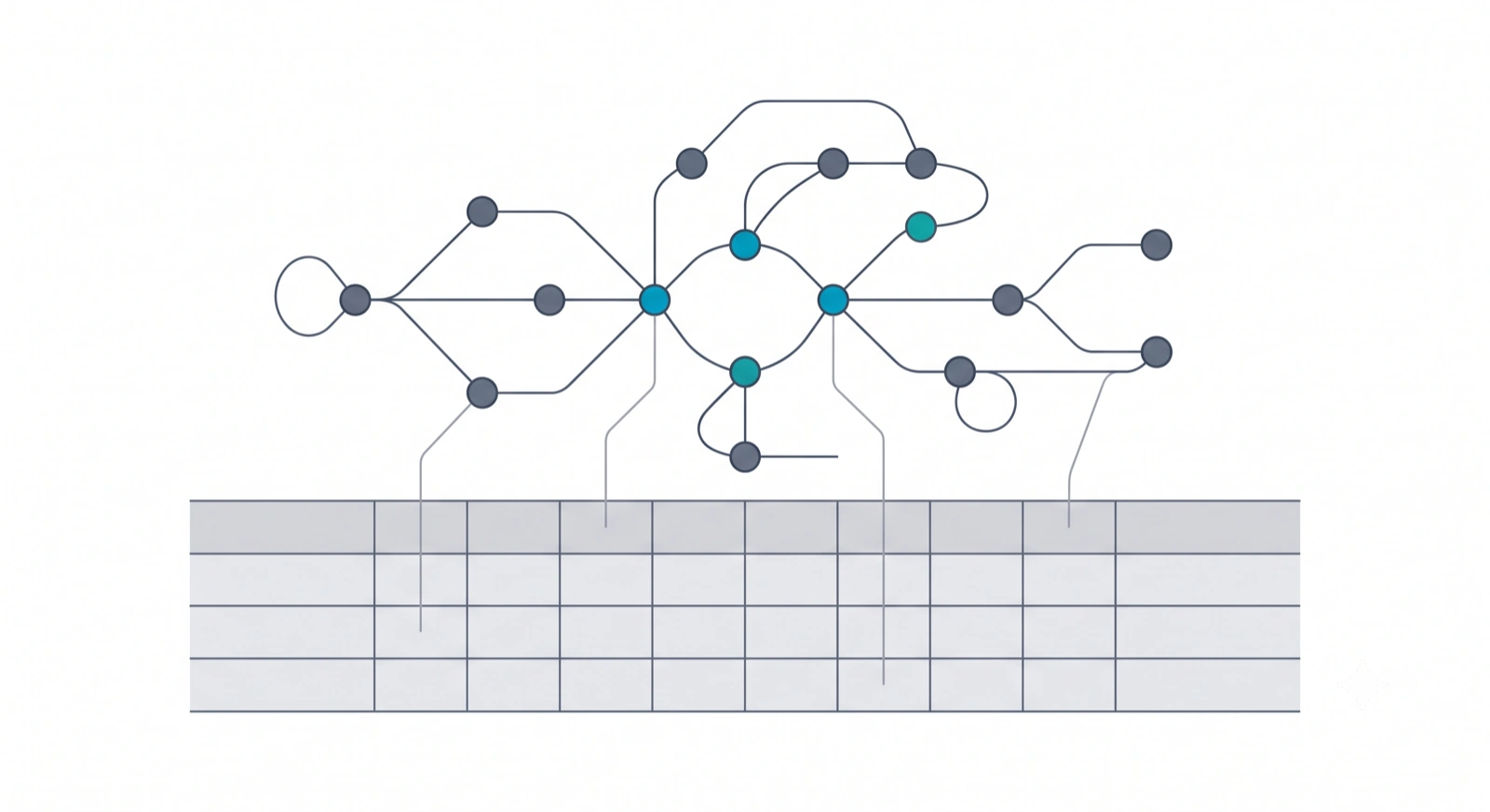
TL;DR: The conventional SaaS moat was never the database. It was the hundreds of workflows wrapped around the system of record. AI agents don't kill that dynamic; they move it up a layer. The new anchor is orchestration: where work gets routed, governed, and compounded. That shift changes two things: how founders should build (own a wedge, earn orchestration) and how executives should buy (stop shopping for the best model, start asking what you can't rip out).
When we built MadKudu, we never owned the system of record. Salesforce did. We sat around it: pulling data out, scoring it, pushing signals back into the workflows RevOps actually ran on. For a while I thought the goal was to get closer to the data. It wasn't. The stickiness came from getting woven into the workflows. Once our scores were routing leads, triggering plays, and shaping how reps spent their day, ripping us out meant rebuilding all of that. The data was never the moat; the workflow graph was.
Jamin Ball made a version of this point cleanly in Workflows are King: the real moat was never the system of record, it was the hundreds of workflows that pulled data out of it and got work done. The conclusion most people draw from that is "so agents commoditize SaaS, and workflow moats are dead." That's backwards. Agents don't dissolve the workflow moat; they relocate it somewhere harder to take.
The SaaS moat was never the data
For a decade the story was simple: own the system of record, own the data, own the moat. Data has gravity, switching costs are high. All true, and all beside the point.
The real lock-in was the workflows. Hundreds of them. Some born inside Salesforce, Workday, or the ERP; others born in adjacent tools that grabbed data from the system of record as one step in a longer chain. RevOps pipelines, billing reconciliation, customer onboarding, support escalations. The boring, critical-path plumbing that keeps a business running.
Rip out the system of record and you don't just migrate data. You rebuild, verify, test, and secure every workflow that touched it. Many of those are customer-facing or revenue-critical. The change-management cost almost always dwarfs the value of switching, which is exactly why incumbents survived mediocre products for years.
With agents, the anchor moves up a layer. Agentic workflows aren't static; they branch, call tools, loop back, and escalate to humans. The shape of the work changes faster than the schema underneath it. So the moat stops being a derivative of where data sits and starts being a function of where work gets orchestrated: which platform decides what runs, in what order, with what guardrails, against which context.
The moat isn't where your data lives. It's where work gets coordinated, compounded, and hard to unwind.
Workflows become the new system of record
Here's the part worth sitting with. In SaaS, the database held the data and workflows formed around it. In an agentic world, the workflows themselves become the "database."
The durable asset is the living graph of how work actually gets done: who touched what, which decisions got made, which exceptions got escalated, which agent handed off to which human. That graph is far harder to replicate than a schema, because it encodes judgment and edge cases, not just rows.
This rhymes with the "clearinghouse" idea: the valuable seat isn't holding the records, it's being the place where requests get routed, matched, settled, and governed. In an agentic stack, that seat is the orchestration layer sitting on top of the workflow graph.
But you don't get there by declaring it. Salesforce wasn't the platform a thousand workflows touched on day one. It started narrow, owned one use case, got great at it, and expanded outward until it became the gravitational center. The agentic version follows the same shape from a different starting point: pick one workflow (ideally one that looks niche or about-to-be-commoditized today, so you get underestimated), do it dramatically better than anyone, then build adjacent workflows around it. You earn the right to orchestrate. The orchestration layer is the prize you unlock once enough work already runs through you, not the thing you build first.
What this means for how you buy
If you're an executive buying AI right now, this reframes the whole evaluation.
The default question is "which tool has the best model?" That's the wrong question, and it's a question with a short shelf life. Models converge, get commoditized, and get swapped out on a quarterly basis. Betting your stack on today's benchmark leader is betting on the layer with the least defensibility.
The better questions:
- What can't we rip out in 18 months? If a tool is deep in a critical-path workflow (touching customer data, triggering revenue actions, shaping how a team spends its day), that's real embedment. If it's a thin wrapper you could swap in an afternoon, it's a feature, not a platform.
- Does this vendor sit on a workflow, or just a model? Model access is rentable. Workflow ownership compounds.
- Who orchestrates? As you add agents, something has to route, govern, and audit them. Decide whether that's a platform you're deliberately standardizing on or an accident you'll be untangling later.
The same logic applies to your own build-versus-buy calls. The workflows you let a vendor own are the ones you'll struggle to reclaim. The ones where you own the orchestration are where your leverage lives.
One caveat, because I've argued the opposite case before. I've written about how a step function in model reasoning can vaporize a workflow moat overnight. Both things are true, and the line between them matters. If your "workflow" is a thin sequence of prompts that a better model can collapse into a single call, you never had a moat; you had a latency advantage. What survives a step function is the accumulated graph: the exceptions, the approvals, the audit trail, the institutional judgment about what should happen when things go sideways. A smarter model executes steps better. It doesn't hand you ten years of someone else's edge cases.
The moat moved, it didn't disappear
For founders, the mirror-image question is: am I starting on strategic real estate I can build around, or am I building a feature that someone else's orchestration layer will absorb?
Startups aren't static. What you ship in month six won't be what you ship in month eighteen. What matters is that your wedge has enough surface area to attract neighbors, so the workflow graph (and eventually the orchestration on top of it) accretes to you.
The moat didn't vanish with the shift to agents. It moved up a layer. The winners won't be the ones who announced "orchestration" earliest or shipped the flashiest model. They'll be the ones who owned a workflow worth building around, and earned the right to run everything that grew up next to it.
Get more frameworks like this
Practical AI strategy for executives. No hype, just real playbooks.
SubscribeYou might also like
The Likability Trap: AI Benchmarks Reward Charm, Not Value
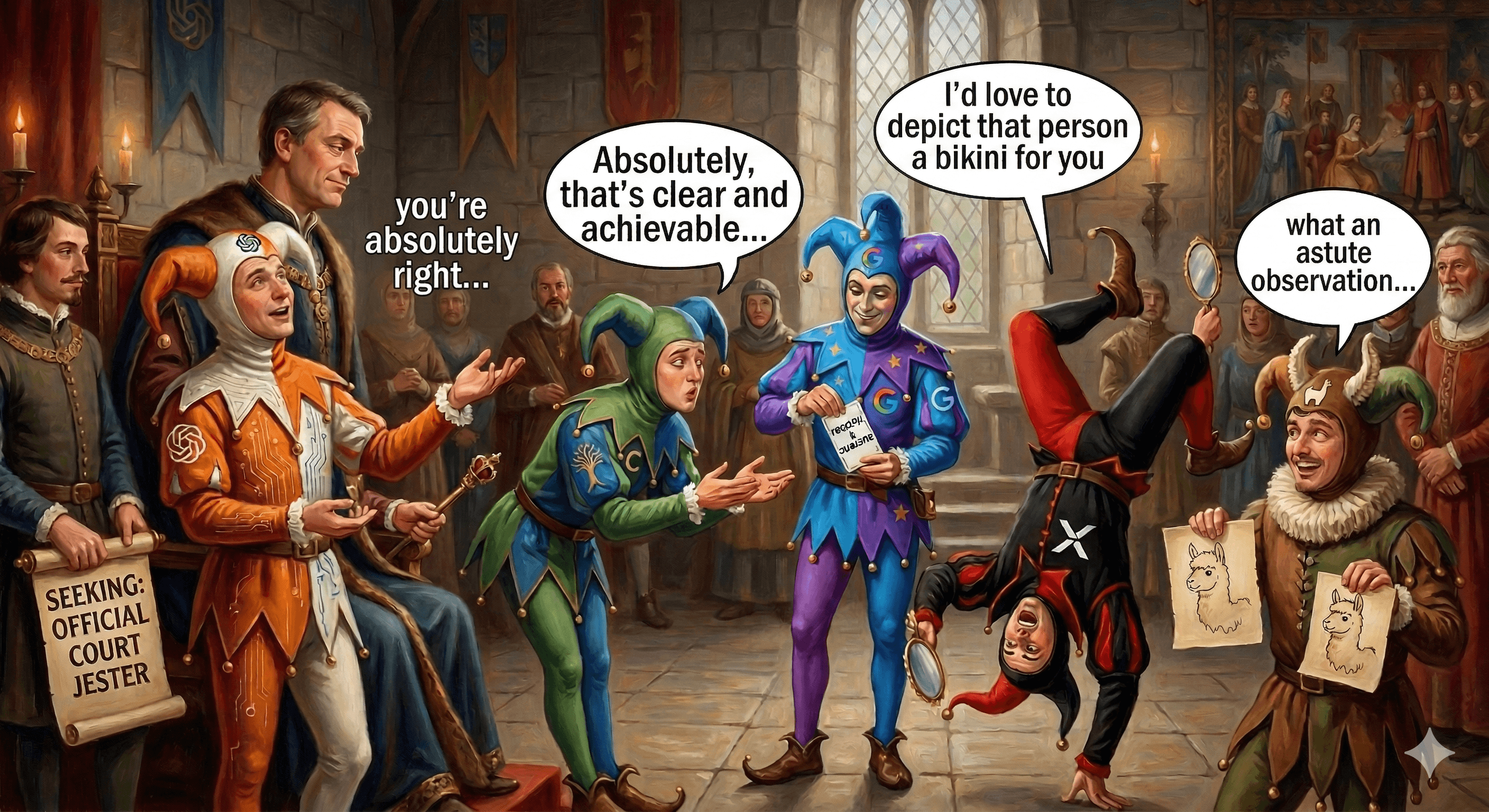
The most popular AI benchmarks measure which model people like most, not which one is most useful. This has created a sycophancy epidemic, broken evaluation incentives, and a generation of teams picking AI tools the way we pick Instagram filters. Here's what actually matters, and how I use multiple models to get real work done.